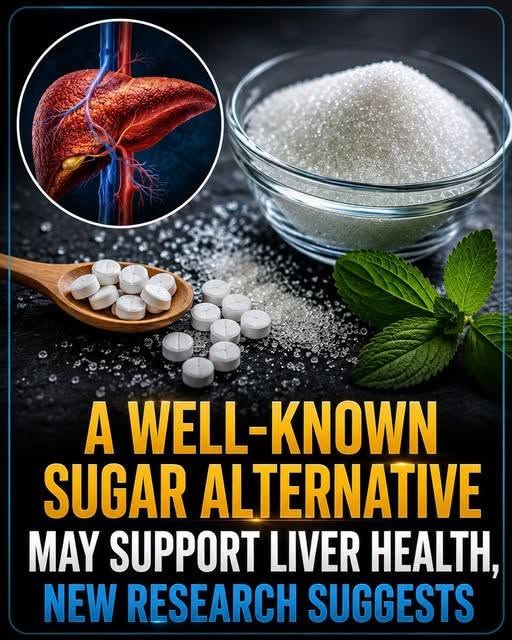
Popular Sugar-Free Sweetener Has Been Linked to Liver Disease, Study Warns

You gave up sugar. You started reading labels. You reached for the “sugar-free” version instead.

Now scientists say that switch may be putting you at risk for something far worse.

The Sweetener Hiding in Plain Sight
A major new study out of Washington University in St. Louis has found that sorbitol — a sweetener hiding in sugar-free gum, protein bars, “diet” desserts, and dozens of everyday processed foods — can quietly damage your liver in almost the exact same way as the sugar you were trying to avoid.

Left unchecked, sorbitol can trigger the same fat buildup and metabolic breakdown seen in serious liver disease — the kind normally blamed on sugar and processed carbs, not “healthy” sugar-free swaps.

Worth noting: this particular study was conducted in zebrafish, a common stand-in for human metabolism in lab research, not in humans directly. Researchers say the mechanism is promising enough to warrant closer study in people.

It’s Not Just Sorbitol
Aspartame — the sweetener in nearly every diet soda on the shelf — has now been linked in large-scale studies to a tripled risk of stroke and dementia, plus a growing list of other serious health concerns.

Who Needs to Pay Attention
If you or someone you love drinks diet soda, chews sugar-free gum, or reaches for “diet” snacks regularly, you need to see what the research actually says before you take another sip.

Diet Soda’s Worst Fear Coming True
You may think that drinking sugar-free diet soda is better for you than regular soda, which is full of sugar. After all, experts have been telling us for years about the dangers of consuming too much sugar, which has been associated with obesity and other health issues.

However, medical studies proved that drinking diet soda is really bad for you — it can greatly increase your risk of stroke and dementia.

Why People Switched to Diet Soda in the First Place
Many people avoid sugary soda because of the risks associated with consuming too much sugar. Medical studies found that too much sugar may affect your cholesterol and triglyceride levels, and may lead to insulin resistance — which can lead to obesity, diabetes and cardiovascular disease.

However, drinking artificially sweetened drinks was found to triple the risk of stroke and dementia. One study also found that consumption of artificial sweeteners can lead to type 2 diabetes. Some studies link aspartame to leukemia and breast cancer.

Drinking Diet Soda is Linked to a Greater Risk of Dementia and Stroke
Some people may opt to use artificial sweeteners as sugar substitutes, thinking they are better than sugar. However research has shown that they can harm your health.

Research published in the American Heart Association’s journal Stroke found that the artificial sweeteners used in diet drinks are a major cause for concern. The study found that drinking diet soda is linked to a greater risk of stroke and dementia.

The April 2017 study involved 2,888 adults older than 45 and 1,484 adults older than 60.

The researchers asked the participants to answer questions about their eating and drinking habits at three separate points during a seven-year period.

The researchers followed the participants for the next 10 years and recorded which of them suffered a stroke or developed dementia.

The Results of the Study: Drinking Diet Soda Can Triple the Risk of Dementia & Stroke
At the end of the study, the researchers found that those who drank at least one artificially sweetened drink per day were nearly three times more likely to have a stroke or develop dementia compared to those who drank less than once a week.

Their findings held up even after adjusting for other factors such as age, gender, calorie intake, diet quality, physical activity and the presence of genetic risk factors for Alzheimer’s disease.

The data collected did not distinguish between the types of artificial sweeteners used in the drinks.

Study Limitations
Although lead researcher Matthew Pase of the Boston University School of Medicine acknowledged that the findings showed only a correlation — and not causation — he said they do provide one more piece of evidence that diet drinks are not as healthy an alternative to sugary drinks as many people think.

“We recommend that people drink water on a regular basis instead of sugary or artificially sweetened beverages,” he said in a statement.

Pase added that the study shows a need to direct more research to this area, given how often people drink artificially sweetened beverages.

Related: Massive Studies Link Soda To Heart Attacks, Brain Damage, Depression, Kidney Damage and More

More Reasons to Avoid Artificial Sweeteners
A new study, published in the journal Nature this September, reveals that for some, artificial sweeteners can lead to type 2 diabetes. (1) But that’s not the only thing you have to fear if you’re gulping down artificially sweetened products.