
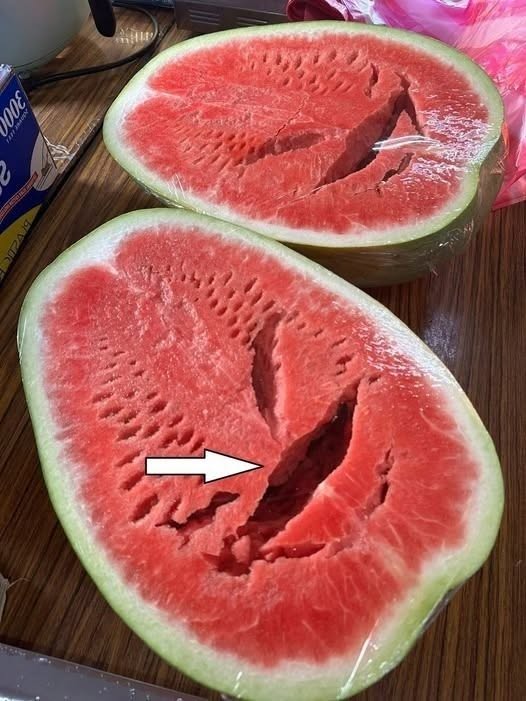
Cutting open a watermelon and finding large cracks, hollow spaces, or unusual cavities inside can look alarming. Viral posts often claim that this means the fruit is “full of chemicals” or unsafe to eat.
That is not always true.
In many cases, internal cracks are caused by a natural condition known as hollow heart, which can develop when the fruit grows unevenly or experiences problems during pollination. A watermelon with clean internal cracks can still be perfectly edible if the flesh is firm, juicy, fresh-smelling, and free from spoilage.
The real warning signs are things like foam, sour odor, slimy flesh, mushiness, leaking liquid, or obvious fermentation.
What Causes Cracks Inside a Watermelon?
Several things can cause the flesh to split or form cavities.
1. Hollow Heart
Hollow heart is a physiological disorder in which the inside of the watermelon develops cracks or open spaces.
It can happen when fruit growth and tissue development do not occur evenly.
The watermelon may still:


