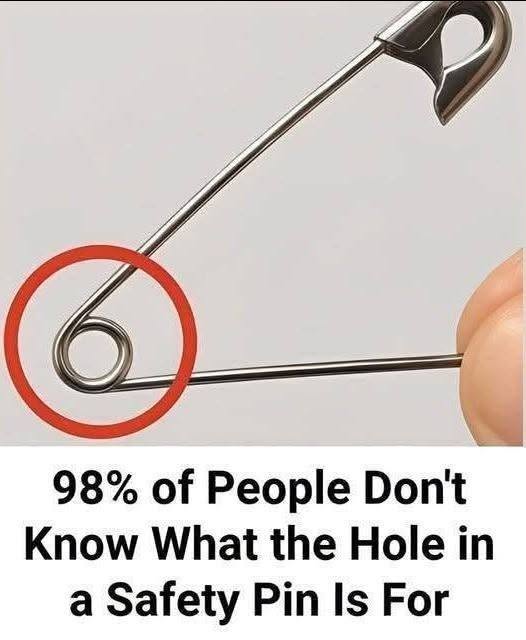
Unexpected Uses for the Hole
Interestingly, while the hole’s original purpose is structural, enterprising individuals have found creative ways to repurpose it. Some use the opening to thread ribbons or wires through, securing the pin to objects more effectively or preventing it from slipping during craft projects. Others loop thread through the hole in embroidery or sewing projects to anchor pins more precisely.
Though these applications weren’t part of the initial design, they demonstrate the versatility of the safety pin. This little tool, already ingenious in its own right, becomes even more useful in hands that know how to leverage its features creatively.
A Brief History of the Safety Pin
The safety pin was invented in 1849 by Walter Hunt, an American mechanic. Remarkably, he created it in just a few hours to pay off a $15 debt—a small sum, but enough to inspire ingenuity. Hunt patented the invention but sold the rights for only $400. Little did he know that his simple idea would evolve into an essential household item used worldwide for over a century and a half.
At the time of its creation, Hunt likely didn’t anticipate that future generations would marvel over the tiny hole in its coil, debating its purpose and clever design. Yet here we are, more than 150 years later, uncovering the genius behind the safety pin’s details.
Why Safety Pins Are Engineering Marvels
Beyond the hole, the safety pin as a whole is a lesson in minimalist yet effective engineering. It combines affordability, durability, and multifunctionality in a compact, elegant design. From securing clothes to assisting in first aid, DIY projects, or even managing baby cloth diapers, the safety pin has endured as a staple tool precisely because of thoughtful design details, including the coil hole.
It’s a reminder that even the most ordinary objects can conceal incredible ingenuity. Similar design elements are present in other everyday tools—the groove at the bottom of a plastic bottle, holes in pot handles, or the ridges in certain kitchen utensils—all serving crucial functions we rarely notice.
The Hole: Small but Mighty
To recap, here’s why the tiny hole in a safety pin matters so much:
It’s a crucial component of the spring mechanism, maintaining consistent tension.
It ensures the pin snaps back into place every time it’s opened and closed.
It acts as an anchor during manufacturing, allowing precise formation of the coil.
It can even be creatively repurposed in crafts, sewing, or DIY projects.
Next time you pick up a safety pin, consider this tiny detail. That hole, seemingly insignificant, is a perfect example of thoughtful design in everyday objects. It’s a reminder that even simple tools can be marvels of engineering, packed with subtle but essential features that make them reliable and versatile.
In other words, don’t just toss that safety pin into your drawer. Appreciate it. Marvel at the hole. And next time someone asks why a safety pin works so well, you can impress them with the tiny but mighty secret hidden in its coil