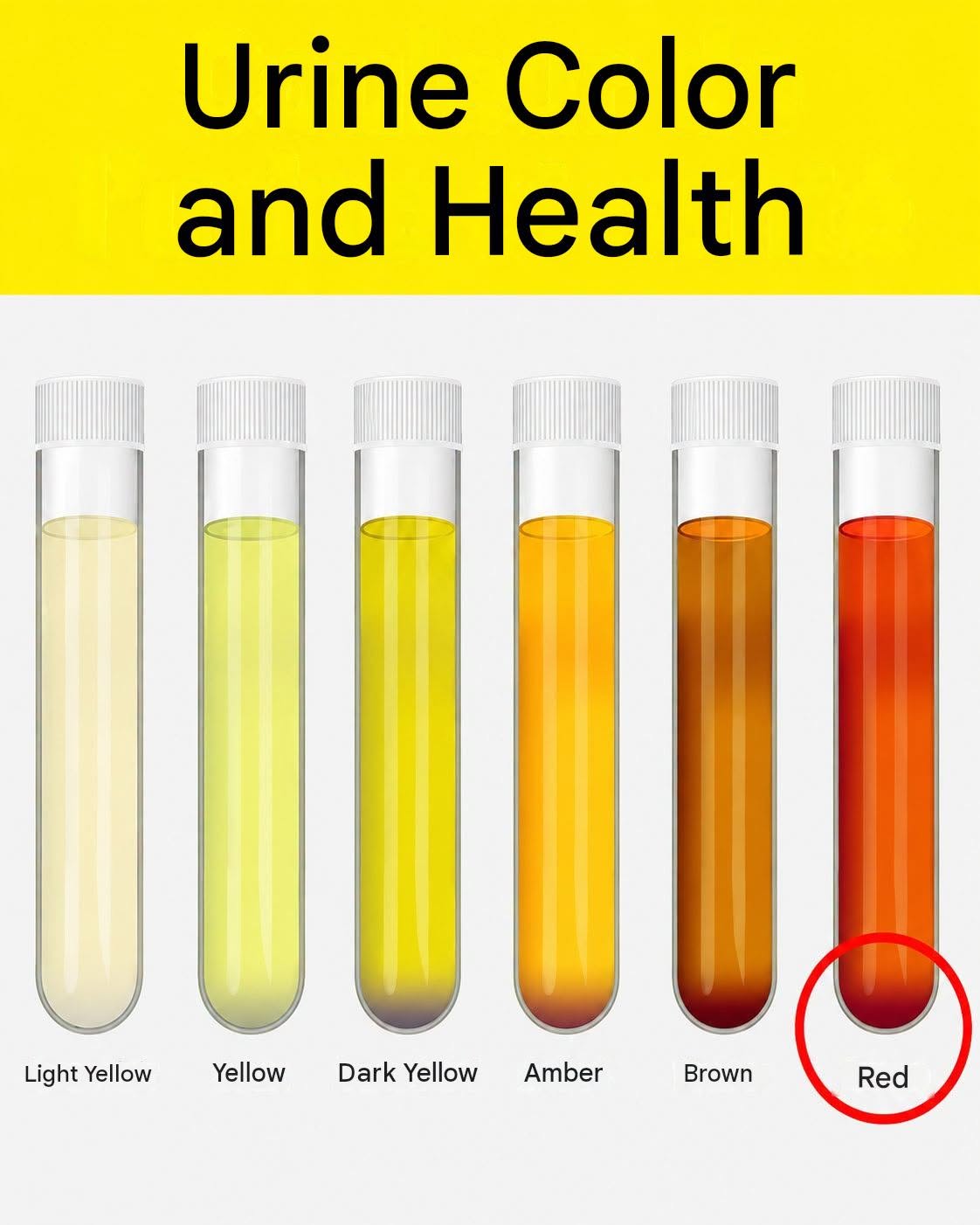
* **Pale yellow:** usually well hydrated
* **Dark yellow:** may need more fluids
* **Very dark amber:** could indicate significant dehydration
* **Clear all the time:** may reflect very high fluid intake or excessive urination
This is only a rough guide because medications, vitamins, and foods can change the color independently of hydration.
## When You Should See a Doctor
Seek medical advice if urine color changes persist without an obvious explanation, especially if you also have:
* Pain or burning when urinating
* Fever
* Visible blood
* Lower back or flank pain
* Yellow skin or eyes
* Very little urine
* Significant swelling
* Repeated vomiting
* Severe weakness
## When It Is More Urgent
Seek prompt or emergency care for:
* Blood in the urine with severe pain
* Inability to urinate
* Very dark urine with severe muscle pain
* Jaundice with dark urine
* Severe dehydration with confusion or fainting
* Fever and flank pain
## The Bottom Line
Urine color can provide useful clues, but it should never be used as a diagnosis by itself.
Most color changes come from **hydration, diet, vitamins, or medications**. More concerning changes include **persistent red, brown, orange, or unusually cloudy urine**, particularly when accompanied by pain, fever, jaundice, swelling, or changes in urination.
The safest rule is simple: if the color change is persistent, unexplained, or accompanied by other symptoms, get it checked.