I arrived just before sunrise, stepping off a red-eye flight that left my body aching and my mind foggy—the kind of overnight trip where the lights never fully go dark and rest comes only in shallow pieces. As I moved through the hushed terminal, coat folded over my arm, I checked my phone again, already certain of what I’d find, yet still hoping to be proven wrong.
Promoted Content
Cardiologist: The Morning Habit That Burns Fat After 50
More...
764
191
255
My son, Ryan, was meant to be waiting for me outside.
He wasn’t.
I called once, then again, and watched the third call disappear into voicemail. After thirty minutes of pacing beneath the blinking arrivals screen, a familiar weight settled in my chest—the same disappointment I’d carried for years whenever I needed him to be more than smooth words and empty excuses.
I took a cab straight to the hospital.
The driver didn’t pry, but when I gave him the address, his expression softened, as if he understood that no one headed there expecting good news.
Inside, the air carried the sharp scent of antiseptic and restrained urgency. When I reached the desk and gave my name, the nurse stopped me before I finished spelling it, her face shifting into a calm, practiced sympathy.
“You’re here for Claire,” she said softly.
My stomach sank.
Claire—my daughter-in-law—was younger than Ryan, gentler than he deserved, and endlessly patient in ways that had always concerned me, because patience often disguises neglect as endurance.
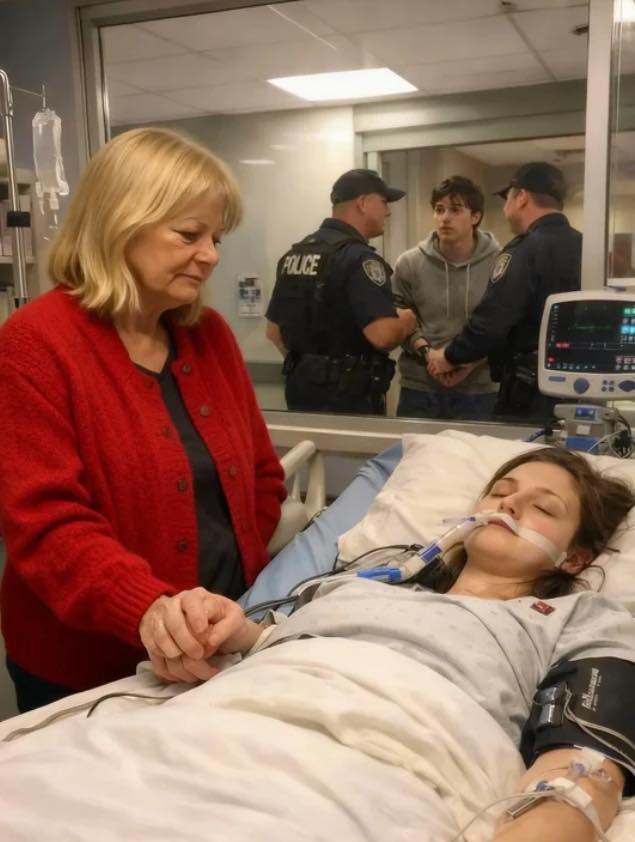
She lay in the ICU surrounded by machines that hummed and beeped without emotion, tubes moving with each assisted breath, her skin washed pale under unforgiving lights. There was no husband nearby, no reassuring voice telling her she wasn’t alone—only a plastic chair and a paper cup of coffee that had gone cold long ago.
I sat and took her hand, careful not to disturb the IV, feeling the faint warmth still there, and wondered how a man could know his wife was fighting for her life and still choose to be anywhere else.
When Ryan finally answered, his voice was loud and careless, music thumping behind him like a pulse he didn’t deserve.
“Mom, what is it now, I’m kind of busy, can this wait.”
I asked where he was, surprised by how steady my voice sounded.
He laughed—actually laughed—and said he was out driving to clear his head, that Claire was stable according to the last update, that doctors always exaggerated, that I worried too much.
I ended the call without saying another word.
Later, as the night wore on and the machines kept rhythm beside Claire’s bed, a nurse handed me her phone, explaining they needed to confirm emergency contacts. As I scrolled through missed calls and unread messages, I found exactly what I hadn’t realized I was searching for.
🔥 Continue Reading 👇 Next Page