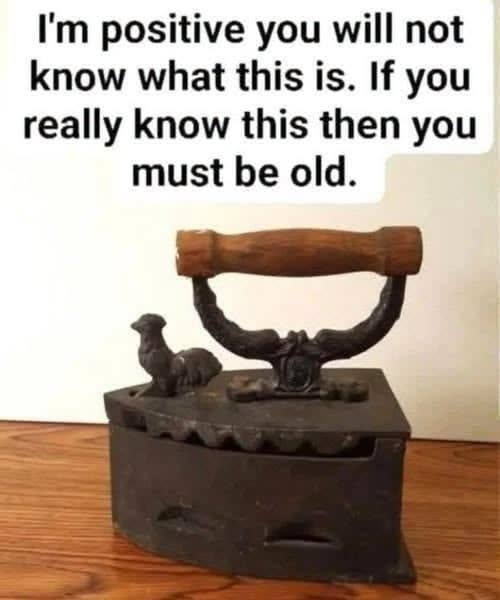
The person using the iron had to understand how to manage the heat.
There was no thermostat to make the decision for them.
That meant experience mattered.
Someone who had used a charcoal iron for years could probably recognize when it was ready simply by observing its behavior.
Ironing Was Once a Much Bigger Chore
The charcoal iron reminds us just how different household work used to be.
Today, many people think of ironing as a relatively small chore.
But in earlier generations, preparing clothing could require significant amounts of time and physical labor.
Clothes had to be washed.
They had to be rinsed.
They had to be dried.
They had to be folded.
And many garments needed to be ironed.
There were no washing machines in many homes.
There were no dryers.
There were no permanent-press fabrics designed to resist wrinkles.
There were no lightweight steam irons with temperature controls.
Much of the work had to be done manually.
The humble charcoal iron was therefore part of a much larger system of household labor.
Why Did People Need to Iron Clothes So Carefully?
Wrinkled clothing wasn’t necessarily considered acceptable for many occasions.Textiles & Nonwovens
People often took great pride in appearing neat and well dressed.
Pressed clothing could communicate care, respectability, and attention to detail.
For families preparing for church, work, school, weddings, special gatherings, or other important events, ironing could be an essential part of getting ready.
A neatly pressed shirt or dress could make a noticeable difference.
And because clothing was expensive and often carefully maintained, people wanted garments to look their best for as long as possible.
The charcoal iron was one of the tools that helped accomplish that.
Imagine Doing Laundry Without Electricity
Perhaps the easiest way to appreciate the old charcoal iron is to imagine losing electricity completely.
Today, a power outage can be an inconvenience.
But for people who lived before widespread household electrification, electricity wasn’t something they expected to have.
They relied on fire, wood, charcoal, manual labor, and simple mechanical tools.
If they wanted to heat an iron, they needed a heat source.
If they wanted to wash clothes, they needed water and physical effort.
If they wanted to dry clothing, they relied on sunlight, air, or other methods.
Household tasks required planning.